Visual Library & 3D Models
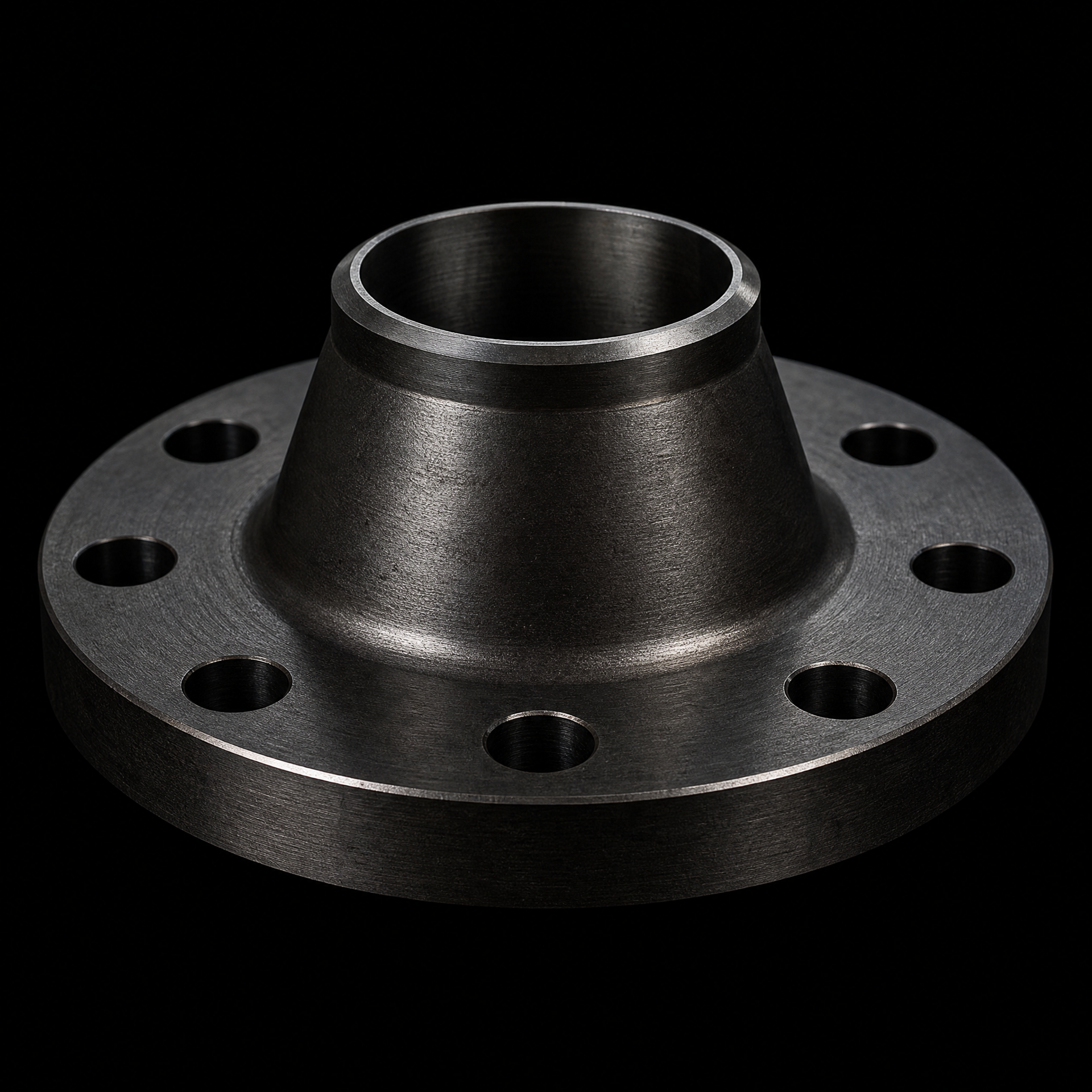
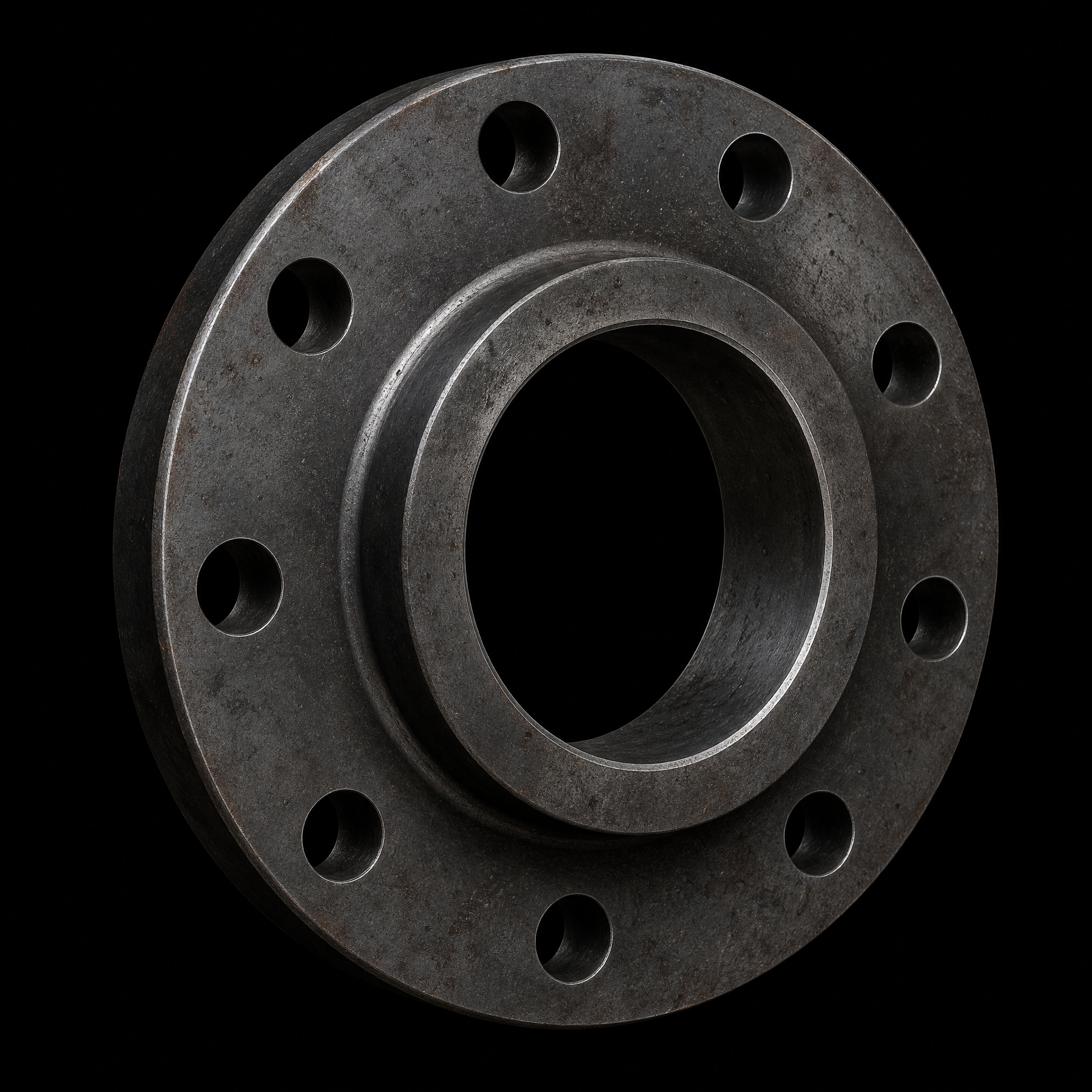
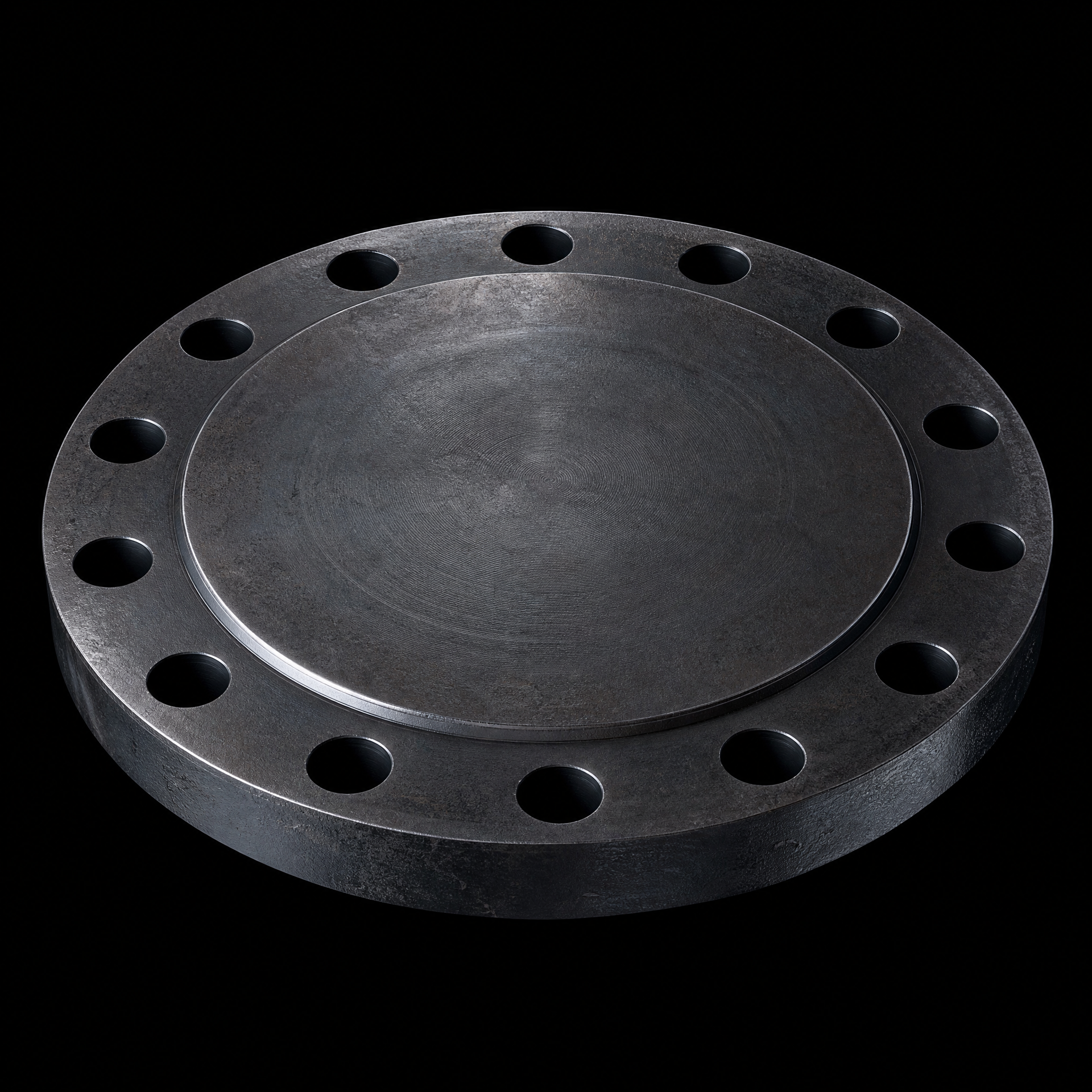
Surplus and used flange photos submitted by sellers are displayed here.
Installation examples and field photos from refinery and pipeline projects.
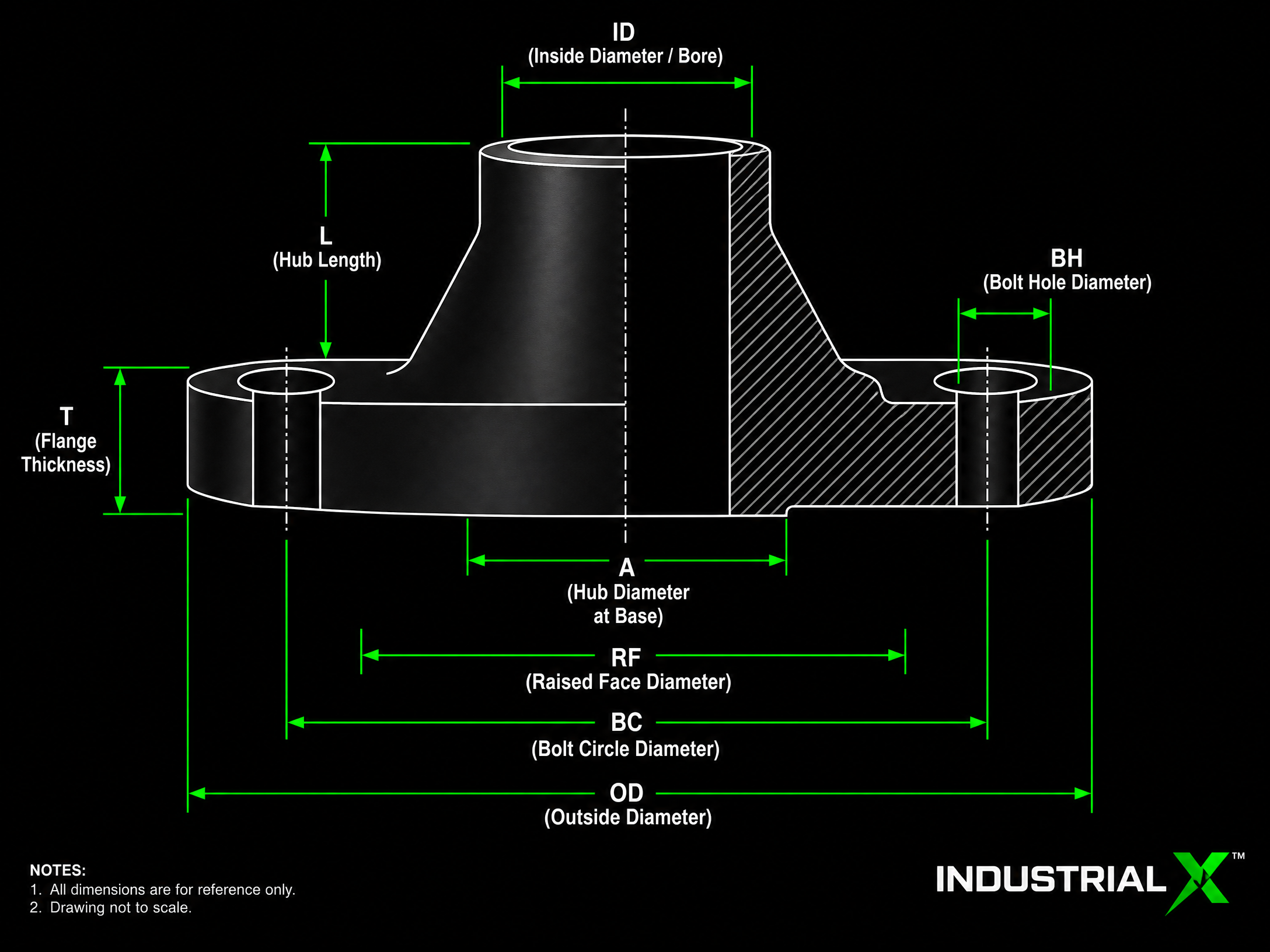
ASME B16.5 Class 150 — Dimensional Specifications
The table below provides standard dimensions for ASME B16.5 Class 150 carbon steel flanges manufactured from ASTM A105 forged carbon steel. These are the most commonly traded flanges in surplus industrial markets. All dimensions are in inches.
| NPS | OD (in) | Thickness T (in) | Raised Face Dia. (in) | Bolt Circle BC (in) | # Bolts | Bolt Hole Dia. (in) | Approx. Weight (lbs) |
|---|---|---|---|---|---|---|---|
| 1" | 4.25 | 0.56 | 2.00 | 3.12 | 4 | 0.62 | 3 |
| 1.5" | 5.00 | 0.69 | 2.88 | 3.88 | 4 | 0.62 | 5 |
| 2" | 6.00 | 0.75 | 3.62 | 4.75 | 4 | 0.75 | 7 |
| 3" | 7.50 | 0.94 | 5.00 | 6.00 | 4 | 0.75 | 12 |
| 4" | 9.00 | 0.94 | 6.19 | 7.50 | 8 | 0.75 | 18 |
| 6" | 11.00 | 1.00 | 8.50 | 9.50 | 8 | 0.88 | 30 |
| 8" | 13.50 | 1.12 | 10.62 | 11.75 | 8 | 0.88 | 50 |
| 10" | 16.00 | 1.19 | 12.75 | 14.25 | 12 | 1.00 | 75 |
| 12" | 19.00 | 1.25 | 15.00 | 17.00 | 12 | 1.00 | 105 |
| 14" | 21.00 | 1.38 | 16.25 | 18.75 | 12 | 1.12 | 145 |
| 16" | 23.50 | 1.44 | 18.50 | 21.25 | 16 | 1.12 | 185 |
| 18" | 25.00 | 1.56 | 21.00 | 22.75 | 16 | 1.25 | 235 |
| 20" | 27.50 | 1.69 | 23.00 | 25.00 | 20 | 1.25 | 290 |
| 24" | 32.00 | 1.88 | 27.25 | 29.50 | 20 | 1.38 | 420 |
Types of Carbon Steel Flanges
Weld Neck Flanges (WN)
Weld neck flanges are identified by their long, tapered hub that transitions gradually from the flange body to the pipe wall thickness. This geometry distributes stress across the hub and into the pipe, making weld neck flanges the preferred choice for high-pressure, high-temperature, and cyclic loading applications. They are butt-welded to the pipe and are the standard choice in refinery and offshore applications rated at Class 300 and above.
Slip-On Flanges (SO)
Slip-on flanges are bored slightly larger than the pipe outside diameter, allowing the pipe to slip through before being fillet-welded on both the inside and outside faces. They are easier to align during installation and less expensive than weld neck flanges, making them the most common flange type in general industrial service at Class 150 and 300.
Blind Flanges (BL)
Blind flanges are solid discs with no bore, used to blank off the end of a pipe, nozzle, or vessel opening. Despite having no bore, blind flanges experience the highest bending stress of any flange type due to the full pressure load acting on the solid face. They are critical in pressure testing, maintenance isolation, and permanent end closures.
Threaded Flanges (TH)
Threaded flanges have a tapered pipe thread bore and are screwed onto the pipe without welding. They are used in low-pressure, non-critical applications where welding is not permitted, such as in explosive environments or where heat cannot be applied.
Socket Weld Flanges (SW)
Socket weld flanges have a socket bore that accepts the pipe end, which is then fillet-welded on the outside. They are used for small-bore piping (typically 2 inches and below) in high-pressure service and are common in instrumentation and hydraulic lines.
Material Grades & Standards
| ASTM Grade | Material | Temp Range | Common Application |
|---|---|---|---|
| A105 | Carbon Steel (Forged) | -20°F to 800°F | General industrial, refinery, water |
| A350 LF2 | Low-Temp Carbon Steel | -50°F to 650°F | Cryogenic and cold service |
| A182 F11 | 1.25Cr-0.5Mo Alloy | -20°F to 1100°F | High-temp refinery service |
| A182 F22 | 2.25Cr-1Mo Alloy | -20°F to 1200°F | High-pressure, high-temp service |
| A182 F304/316 | Stainless Steel | -425°F to 1500°F | Corrosive service, food/pharma |
Sell Your Surplus Carbon Steel Flanges
Did a project get canceled? Upgrading to a higher pressure class? Decommissioning a facility? Industrial Fittings Inc. is one of the most active buyers of surplus carbon steel flanges in the United States. We buy all types, grades, and sizes — from single pallets to full truckloads.
- All conditions accepted: New in box, new surplus, used, and take-outs.
- All grades: A105, LF2, F11, F22, stainless, and alloy.
- All sizes: 1/2" through 60" and larger.
- We handle freight: Our logistics team coordinates pickup from your facility.
- Immediate payment: Cash paid before material leaves your yard.
Call us at (713) 201-7285 or Submit a Quote Request Online
Frequently Asked Questions
What is the difference between ASME B16.5 and ASME B16.47?
ASME B16.5 covers flanges from NPS 1/2 through NPS 24. ASME B16.47 covers large-diameter flanges from NPS 26 through NPS 60. B16.47 is divided into Series A (MSS SP-44) and Series B (API 605), which differ in outside diameter and bolt pattern.
What does "Class" mean on a flange?
The pressure class (150, 300, 600, 900, 1500, 2500) indicates the maximum allowable working pressure at a given temperature. A Class 150 carbon steel flange is rated at 285 PSI at 100°F, while a Class 2500 flange is rated at 4730 PSI at the same temperature.
What is the surplus value vs. scrap value of a carbon steel flange?
A surplus carbon steel flange in new condition retains significant resale value above scrap price. A 12-inch Class 300 weld neck flange that costs $400 new may fetch $80-$150 as surplus, compared to $5-$10 as carbon steel scrap. Selling as surplus rather than scrap can yield 10-20x more value for your material.
Do you buy flanges from Houston-area refineries?
Yes. We actively buy surplus flanges from refineries, petrochemical plants, and EPC contractors along the Houston Ship Channel, Baytown, Pasadena, and the Energy Corridor. We can have a buyer on-site within 24 hours. See our Houston location page.